
Chronicles of the Grandmasters: Deng Tietao & Zhu Liangchun — “An Iron-Backbone Doctor” and the “Master of the Five Poisons,” Two Brilliant Jewels Whose Friendship Lit Up an Era

Between Deng Tietao (邓铁涛) and Zhu Liangchun (朱良春)—two towering figures of 20th–21st century Chinese medicine—there exists one of the most moving legends in the modern Xinglin(Apricot Grove, i.e., the world of Traditional Chinese Medicine). Born just a year apart (1916–1917), they walked out of China’s turbulent modern history, weathered the hundred-year struggle of Traditional Chinese Medicine (TCM) to survive and revive, sharpened each other academically, fought side-by-side institutionally, and cared for one another like family. What remains is not only scholarship, but an enduring story of loyalty, magnanimity, and shared mission.
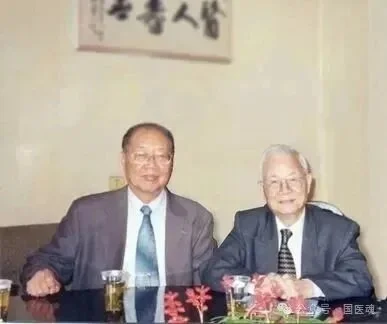
1) “Master of the Five Poisons” — Founding the Zhang–Zhu School
Zhu Liangchun was born in 1917 in Zhenjiang, Jiangsu, later settling in Nantong. He came of age in a time of upheaval: Chinese medicine, battered by the “Eastern advance of Western learning,” was publicly vilified and even faced existential threats of abolition. Witnessing suffering as a boy, Zhu resolved early to study medicine to serve others.
In 1938, Zhu formally apprenticed himself in Shanghai to Zhang Cigong (章次公)—one of the preeminent physicians and scholars of the Republican era—and inherited his teacher’s spirit and method. Together, master and disciple championed the maxim:
“Carry forward the ancient meaning; integrate new knowledge.”
“Do not hoard experience; do not take knowledge to the grave.”
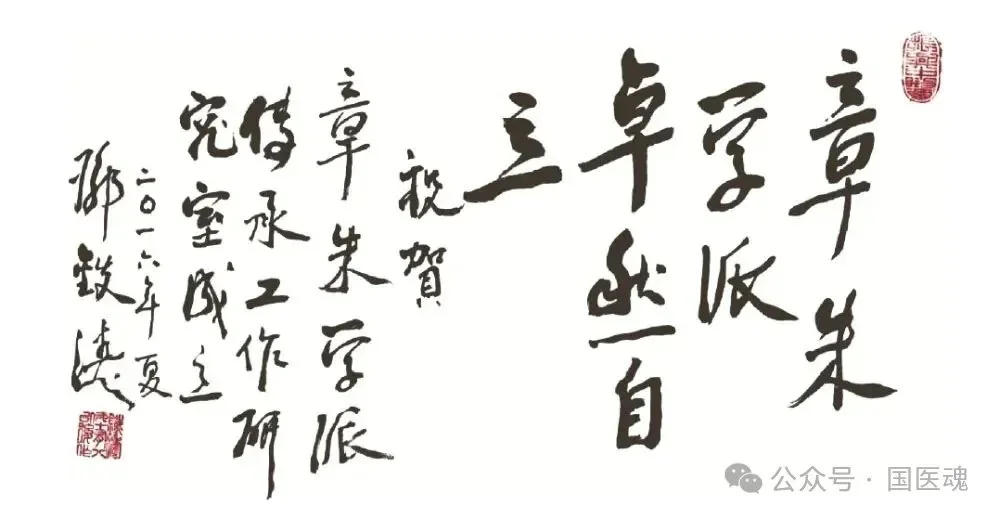
From this ethos emerged what later became known as the Zhang–Zhu School (章朱学派)—an intellectual lineage that remained deeply rooted in classical foundations while refusing to shut its eyes to the real world. Deng Tietao once praised the school as standing “remarkably on its own merits” (卓然自立).
Though he spent most of his life based quietly in Nantong, Zhu became a national name. In his early twenties, practicing in Nantong, he famously pasted a handwritten note on his clinic door:
“For the poor and the ill: free consultation and free medicine.”
When a patient could not afford payment, Zhu would stamp the prescription with a free-dispensing seal. The patient would take the stamped script to designated herbal pharmacies, receive the herbs free of charge, and Zhu would personally settle the bill with the pharmacy owners at Dragon Boat Festival, Mid-Autumn Festival, and year-end. He kept this habit from youth well into old age.
Over more than seventy years of practice, Zhu insisted again and again:
“The life of Chinese medicine lies in therapeutic effect—and effect depends on precise pattern differentiation and masterful use of medicinals.”
His range was enormous—arthralgia (bi-syndrome), spleen–stomach disorders, liver disease, kidney disease, geriatrics, and cancer supportive care—but he became best known worldwide for his fearless, rigorous use of insect-derived and toxic-class substances, earning him the titles “scholar of insect-medicinals” and “Master of the Five Poisons” (五毒圣手). He is widely regarded as the first after Li Shizhen’s Compendium of Materia Medicato systematically document and conduct comparative, specimen-based studies on insect/mineral-toxic classes of materia medica.
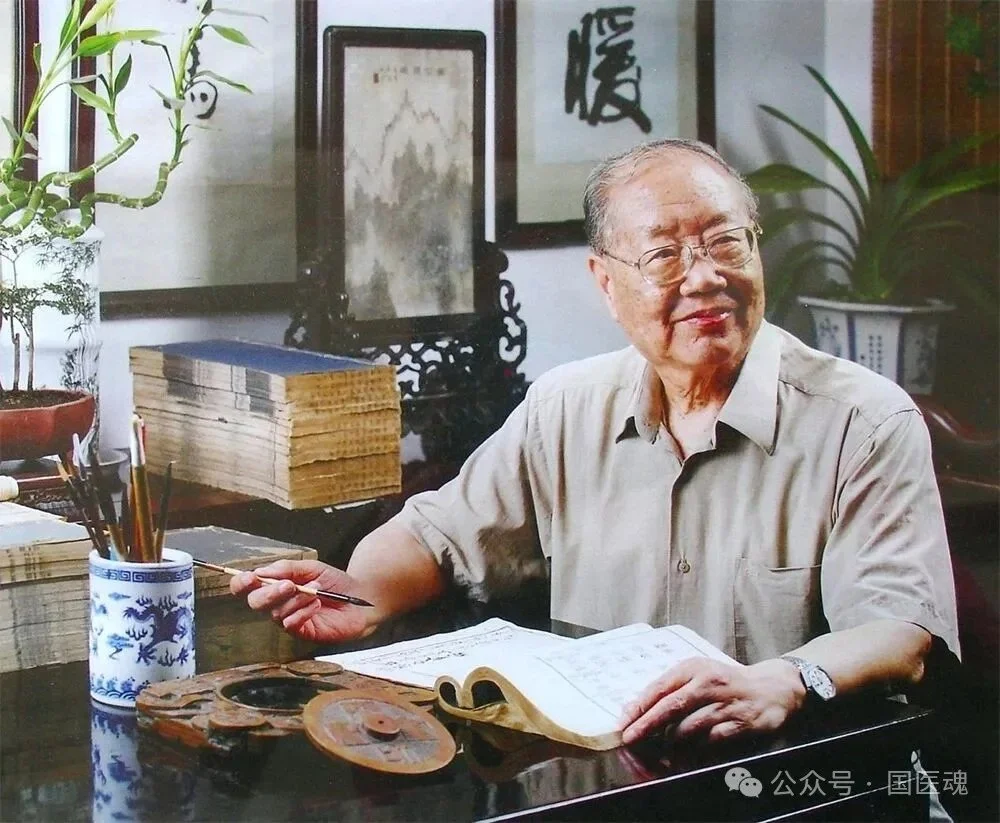
2) “A Pillar of China” — A Friendship Spanning More Than Half a Century
Deng Tietao and Zhu Liangchun differed in stylistic emphasis—Deng the great synthesizer and institutional defender, Zhu the clinician-innovator who never left the front lines of the clinic—but they were drawn together early. They had known each other since at least the 1960s, and their bond deepened over more than fifty years.
Whenever Deng mobilized national petitions or launched landmark projects—such as inviting China’s most eminent elder doctors to Lingnan for collective apprenticeship programs—Zhu was consistently there, shoulder to shoulder.
The inscribed message at the 2014 symposium
In 2014, during the 50th anniversary of the First Affiliated Hospital of Guangzhou University of Chinese Medicine, a flagship event was held:
“Academic Thought of Grand Master Deng Tietao & Symposium on the Theory of the Five Zang-Organs Interrelationship (中医五脏相关理论)”
Zhu, unable to travel due to a back injury, sent his daughter and academic heir Zhu Jianhua (朱建华) to present a personal congratulatory message written in his own hand. It read (paraphrased into faithful English):
“Master Deng Tietao has devoted his life to the Way of Medicine, profound in learning and vast in hard-won experience.
His advocacy of the Five-Zang interrelationship stands among the finest new syntheses our field has seen—truly singular in theory, peerless in the Apricot Grove.
He defended the Yellow Emperor’s legacy with raised arm and loud voice; when SARS struck, he stepped into the breach without hesitation.
A pillar of China, shining at the very head of the line.
To such a benevolent one, may Heaven grant long life—this is my sincere prayer.”
Every word carried the weight of long-shared history.
3) Growing the Young—“The Future Lies Not Behind Us, But in the Youth”
Both men lived through TCM’s darkest and brightest turns. They knew that the rise or fall of Chinese medicine depends on people, and so they poured themselves into the next generation.
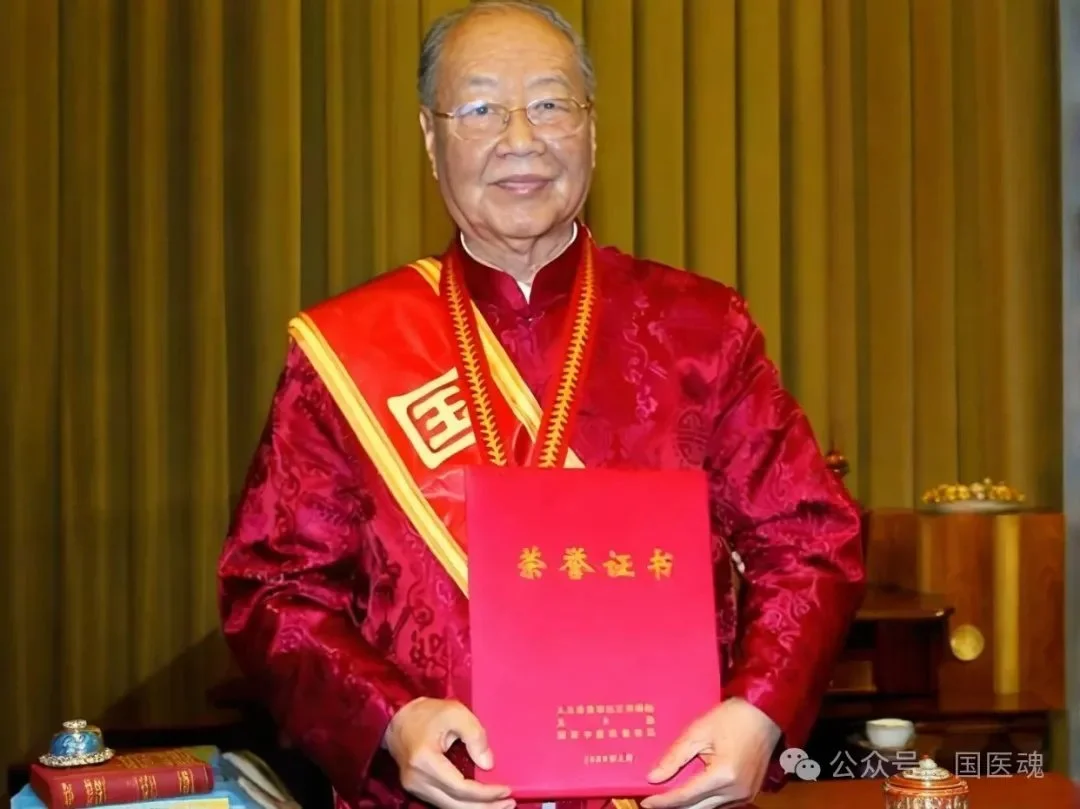
As China’s first cohort of National Distinguished TCM Heritage Mentors and inaugural Grand Masters of Chinese Medicine (国医大师), they were fierce but generous towards each other’s students. Beyond the traditional master–apprenticepath, they organized lectures, advanced seminars, and training programs—producing wave after wave of “iron-backbone physicians” (铁杆中医).
In 2005, spearheaded by Deng and Zhu—joined by elders such as Yan Dexin (颜德馨) and Ren Jixue (任继学), and backed by hospital leadership (notably Lyu Yubo/吕玉波 of Guangdong Provincial Hospital of Chinese Medicine)—the First High-Level Forum of Renowned Chinese Medicine Scholars was convened in Nantong. The profession called it nothing less than a “grand occasion for a grand era.”
Later, as concerns grew that the transmission chain was thinning, Deng wrote “Words to 21st-Century Young Doctors of Chinese Medicine”—a rallying cry for cultural confidence and historical opportunity. Zhu replied in kind with “A Letter to Young Comrades Aspiring to Study Chinese Medicine,” laying out, step by step, how to read the classics, how to sit at an elder’s bench, how to learn without imitating blindly. Eventually they jointly drafted a “Letter to All Young Chinese Medicine Practitioners Across the Nation”—every line heavy with expectation.
They understood clearly:
The future of Chinese medicine is not in the past. It is in the present—and above all, in the young.
4) An Elder’s Care in Six Characters
Even past ninety, Zhu Liangchun still saw patients—sometimes refusing to stop until everyone was seen, even if it meant missing meals.
“At my age, I’m certainly not doing this for money,” he said. “If my strength holds, I’ll see a few more. Medicine is the art of benevolence(仁术), not merely a livelihood.”
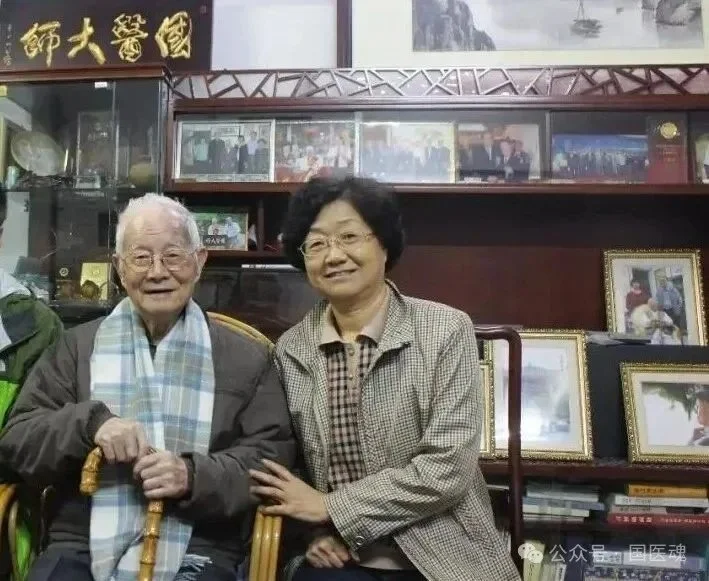
During the 2014 Mid-Autumn Festival period, when Deng’s students accompanied Zhu’s daughter Zhu Jianhua on a visit, Deng asked anxiously:
“Does Elder Zhu still take clinic?”
Zhu Jianhua answered honestly: “There are too many patients; seeing how severe their conditions are, Father can’t bring himself to stop.”
Zhu was already 97. Deng, worried that relentless clinic hours would wear down his lifelong friend, turned to Zhu Jianhua and slowly said:
**“Go back and tell him six words from me:
‘Long becomes short; short becomes long.’**
Don’t fight the young ones for the frontline trenches. Let them grow. Elder Zhu should move back to the command post—he shouldn’t still be charging on the frontlines.”
Then Deng had his student dial Zhu’s number right there, and he personally told his old friend: rest, take care.
That care showed in small things, too. Because Deng himself could no longer eat raw apples, he used a special slicer to cut them into eight pieces and steam them. When he found it convenient, he sent one of those little devices to Zhu Liangchun so his friend could enjoy apples the same gentle way.
5) The “Zhu Army” — And “If You Have a Daughter, Let Her Be Like Zhu Wanhua”
Zhu Liangchun’s family became legendary in its own right: seven children, five of whom entered medicine; counting sons- and daughters-in-law and grandchildren, more than a dozen chose careers tied to Chinese medicine. They are affectionately called the “Zhu Army” (朱家军).
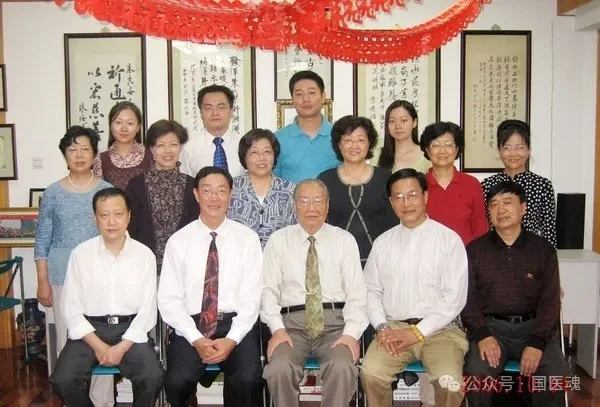
The fifth child and academic heir, Zhu Wanhua (朱婉华), eventually took up the standard—founding the Nantong Liangchun Institute of Clinical Chinese Medicine Research. On the institute’s 10th anniversary, Deng Tietao sent a congratulatory letter containing a line that would be quoted everywhere:
“If you have a daughter, let her be like Zhu Wanhua.”
(生女当如朱婉华)
It was both high praise of her capability and a glimpse of the warm kinship between two families.
Zhu Wanhua often trailed behind the old masters at conferences and events. She once recalled:
“The senior masters frequently taught on the same stage—I was just the junior shadowing them.”
She also told a beloved anecdote: Yan Dexin and Zhu Liangchun were fellow townsmen, party comrades, and classmates—closer than close—so she called Yan “godfather”(干爹). When Deng heard this, he teased her:
“Then what do you call me?”
Zhu Wanhua replied with perfect timing: “You’re exactly one year older than my father—so you’re Uncle (大伯).”
Deng burst out laughing.
One word—Uncle—said everything: not relatives by blood, but bound tighter than blood.
6) Passing, Yet Still Present — The Apricot Grove Remembers
On December 14, 2015, Zhu Liangchun passed away in Nantong at 98 years of age.
Deng was grief-stricken—but even after his friend was gone, his concern for the Zhu family’s next generation never ceased.
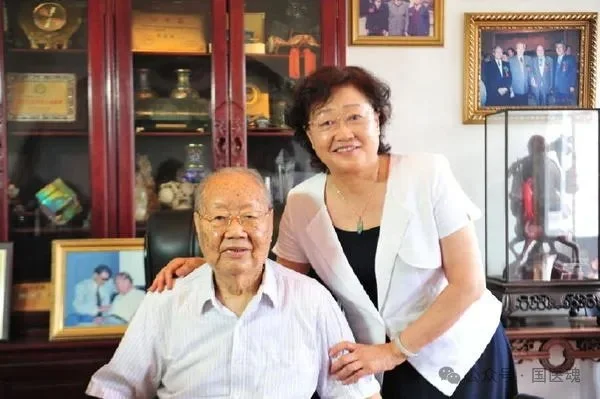
In April 2018, while convalescing in hospital, Deng learned that the GBA (Greater Bay Area) TCM Forum & National Symposium on the Academic Thought of Grand Master Zhu Liangchun was being held in Shenzhen. Too frail to attend, he nonetheless dictated/conveyed a handwritten congratulatory letter, reaffirming Zhu’s academic contributions and expressing hope for the Zhu heirs and their cause.
On January 10, 2019, Deng Tietao passed away peacefully in Guangzhou at 104.
Three years apart, the two grand masters left the profession they had loved for a lifetime.
After Deng’s death, Zhu Wanhua wrote with quiet devotion:
“Grand Master Deng’s virtue and grace blessed our entire field and sharpened all of us who follow. He was a man of the highest moral magnitude, granted his full natural years—passing only after crossing a hundred. Now Uncle has gone to reunite with my father, with Godfather Yan Dexin, and with Uncle Ren Jixue—no doubt already deep in conversation again.”
Closing Reflection
Look back over Deng Tietao’s and Zhu Liangchun’s lives, and you see what “colleague,” “comrade,” and “friend” really mean in Chinese medicine.
In scholarship, they had distinct temperaments and emphases, yet they respected and sharpened one another.
In life, separated by geography, they remained anchored to each other by a single thread: the patient must come first, the lineage must continue, the medicine must live.
Together they gave their hearts to Chinese medicine—and left behind, for all who come after, a warm, weighty legend of the Apricot Grove.
Sources / References (as cited)
Healing the World: Deng Tietao (《悬壶济世邓铁涛》), China Press of Traditional Chinese Medicine
Historical materials from Nantong Hospital of Traditional Chinese Medicine
If you plan to publish this English version anywhere (journal, website, program booklet), tell me your preferred style guide (AMA / Chicago / BMJ) and whether you want pinyin + Chinese characters retained for names/titles—I can typeset it accordingly.