The Ten Essentials of Taijiquan
The Ten Essentials of Taijiquan (Tai Chi) are the core principles for practicing correctly and grasping its essence. While different schools and masters may phrase them slightly differently, their spirit is consistent. Below are the widely recognized Ten Essentials, synthesized from the key teachings of masters such as Yang Chengfu.
1. Lift the Head Spiritually (Xuling Dingjin)
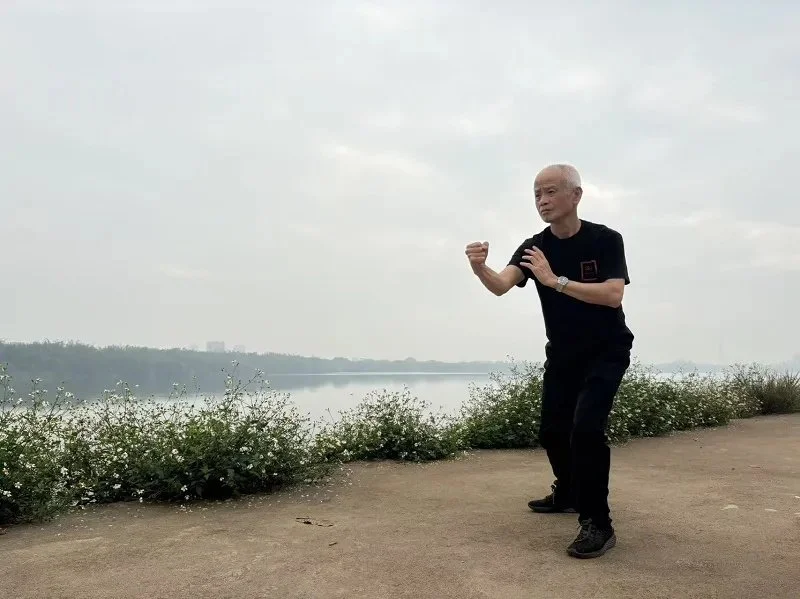
Meaning: Keep the head upright, tuck the chin slightly, and imagine the Baihui (GV-20) point being gently lifted by an invisible thread, so that the spirit is raised. Avoid stiffness—maintain a light, buoyant lift.
Function: Preserves central alignment and ease, focuses the mind, and promotes the smooth flow of qi and blood.
2. Sink the Chest and Lift the Back (Hanxiong Babei)
Meaning: Let the chest relax and slightly contract; do not puff the chest or deliberately cave it in. The back muscles should naturally expand, with a gentle outward and upward lift.
Function: Facilitates sinking qi to the Dantian (lower abdomen), makes movements nimble, and allows power to reach the extremities smoothly.
3. Relax the Waist and Hips (Songyao Songkua)
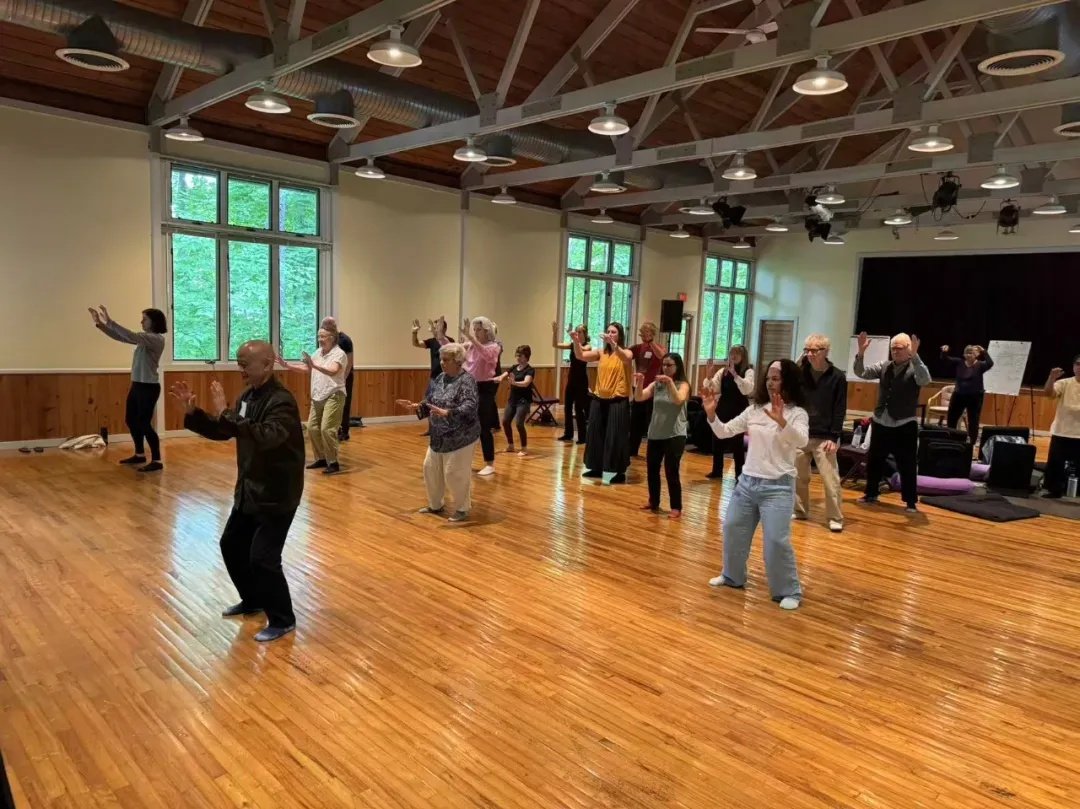
Meaning: The waist should relax and sink, becoming the pivot and master of all movement. The hips should also loosen, making the lower limbs agile and the center of gravity stable.
Function: “The waist is the banner; the hips are the wheels.” Relaxed waist and hips are key to transmitting force and shifting steps—the foundation of Taijiquan’s whole-body power (zheng jin).
4. Distinguish the Solid and the Empty (Fen Xu Shi)
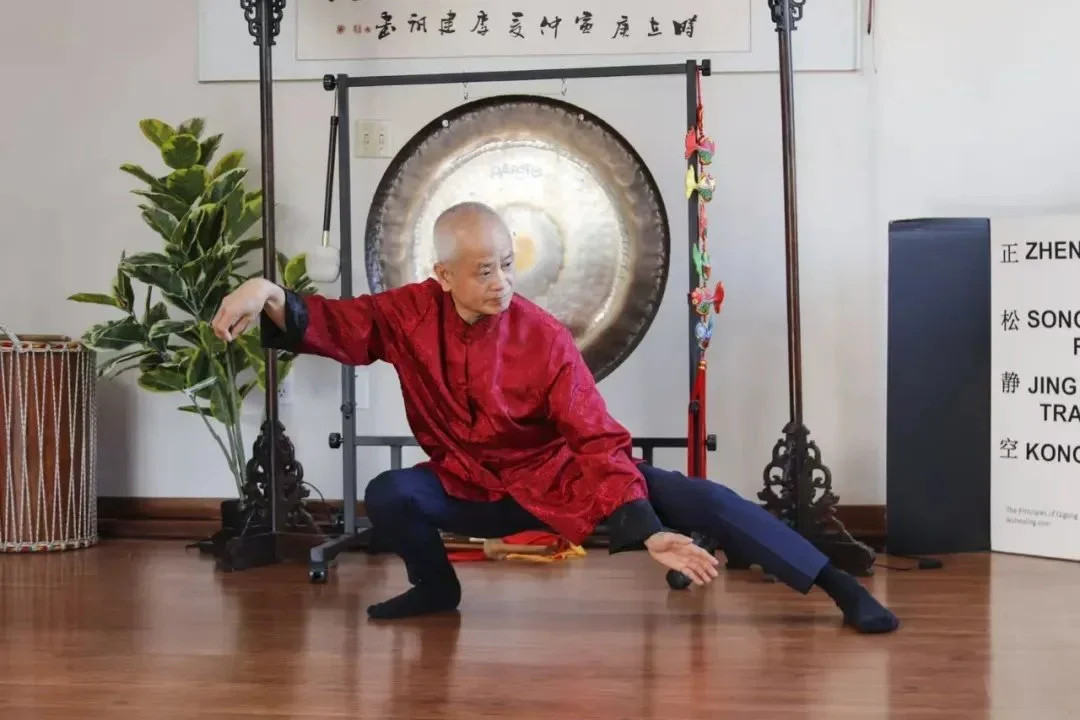
Meaning: This is the core principle of Taijiquan movement. The weight distribution between the legs, hands, and indeed the whole body must be clear, and it should continuously shift with the movements.
Function: Ensures lightness and agility, smooth transitions, and stable balance. Typical examples are the weight shifts in Single Whip (Dan Bian) and Brush Knee and Twist Step (Lou Xi Ao Bu).
5. Sink the Shoulders and Drop the Elbows (Chenjian Zhuizhou)
Meaning: The shoulders relax and drop; do not shrug. The elbows naturally hang down and remain slightly bent, with a downward, relaxed intention.
Function: Makes the arms steady and rounded, contains power within, and connects the limbs to the whole body.
6. Use Mind, Not Force (Yongyi Buyongli)
Meaning: Let consciousness guide movement. The whole body remains highly relaxed, avoiding stiff, brute force. Movements arise from “intention leading form.”
Function: Cultivates internal power (neijin), heightens bodily sensitivity, and achieves the effect of “using four ounces to deflect a thousand pounds.”
7. Coordinate Upper and Lower (Shangxia Xiangsui)
Meaning: When the hands move, the feet, waist, and gaze move as one. The whole body acts in unison—when one part moves, all parts move.
Function: Achieves integration of the whole body, coherent power, and harmonious, graceful movement.
8. Unite Inner and Outer (Neiwai Xianghe)
Meaning: “Inner” refers to intention and breath; “outer” refers to the trunk and limbs. The three—intention, movement, and breath—should be closely coordinated and unified.
Function: This is the elevation from “form likeness” to “spirit likeness,” ultimately attaining the state where form and spirit are both present and inner and outer are harmonized.
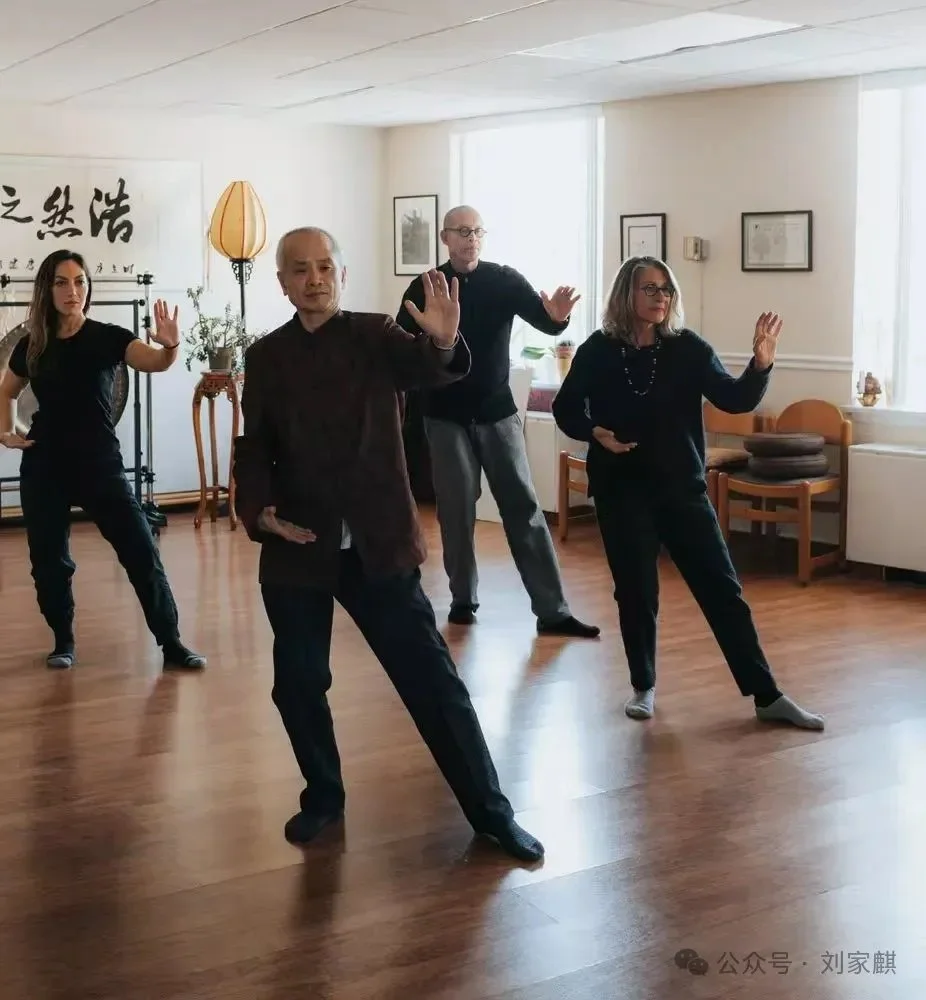
9. Maintain Continuity (Xianglian Buduan)
Meaning: Movements flow like clouds and water, one posture connecting seamlessly to the next, continuous and unbroken, forming an unending whole.
Function: Prevents power from dispersing, cultivates continuous sticky/adhesive power (nian zhuan jin), and aligns with the sustained, gentle motion beneficial for health.
10. Seek Stillness within Movement (Dongzhong Qiu Jing)
Meaning: Amid continuous movement, maintain a calm mind, focused spirit, and relaxed body. Though the exterior moves, the interior remains still.
Function: This is Taijiquan’s highest requirement. It helps regulate the nervous system and supports the cultivation of both body and mind, nurturing temperament and serenity.
Advice for Practitioners
Progress Gradually: You may not master all Ten Essentials at once. Begin with foundational body methods such as Lift the Head Spiritually, Sink the Shoulders and Drop the Elbows, and Relax the Waist and Hips, and savor them step by step.
Apply Throughout: In every posture, use these Essentials to check and refine your movements.
Learn from a Qualified Teacher: Taijiquan details are numerous. A knowledgeable teacher’s in-person guidance helps correct mistakes early, ensuring proper entry and preventing the formation of incorrect habits.
Integrate with Practice: For rehabilitation and recovery, emphasize softness and slowness, using mind not force, and seeking stillness within movement during practice. Focus on regulating qi and restoring vitality—never pursue excessive force or dramatic postures that lead to overexertion.
Mastering these Ten Essentials will enable you to better appreciate Taijiquan as a profound integration of martial art, artistry, and health cultivation.
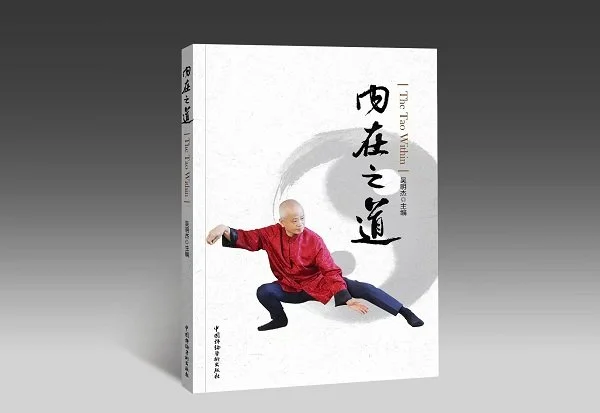
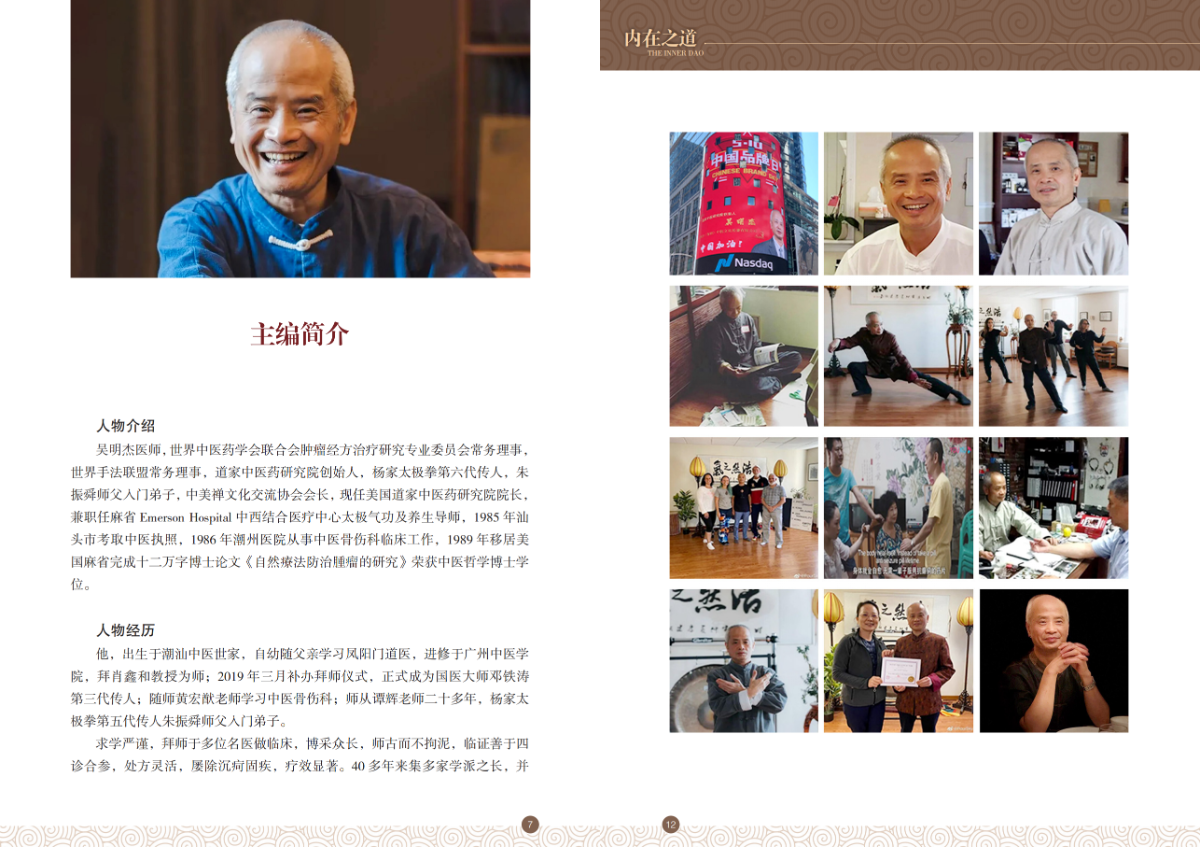
Book overview
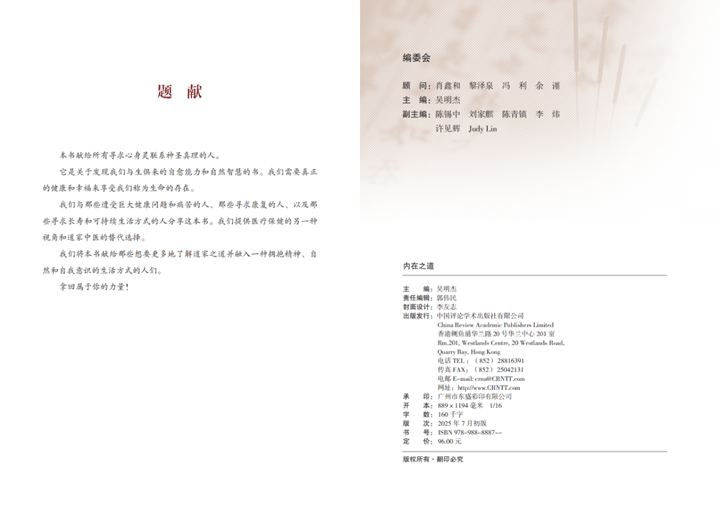
In "The Tao Within," the book embarks on a transformative journey of self-discovery, wisdom, and inner harmony. It shows how spirituality becomes a core element in our everyday lives and in maintaining our health. In the chaos of our modern world, we often find ourselves searching for meaning, purpose, and a deeper connection to our true selves.
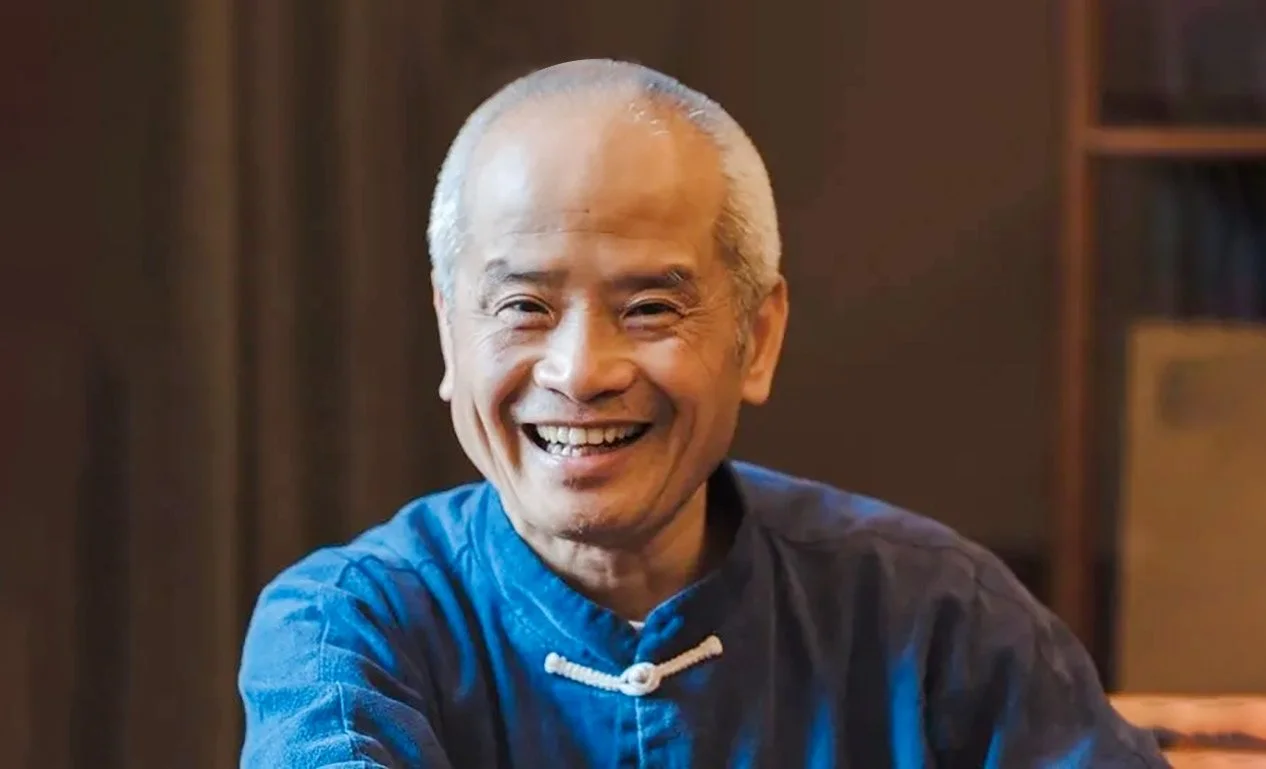
In this profound and insightful exploration, Authors, Ming Wu, Ph.D., and Judy Lin, guide us on a spiritual and medical path toward self-empowerment and unveiling the timeless wisdom of the Tao. As we witness more limitations on western medicine, this book is presenting.
order the Tao within click below llink order from amazon: a.co/d/6ryPrIz