
On the Spiritual Connotation and Contemporary Value of the "Three Ideals" Spirit of National Medical Master Deng Tietao
Author: Yu Jin
Affiliation: Guangdong Centenarian Health Research Institute
Abstract: Professor Deng Tietao, a National Medical Master, is a milestone figure in the history of Traditional Chinese Medicine (TCM) in China. Throughout his life, he not only benefited countless people with his superb medical skills but also constructed a rich spiritual treasure trove with his profound "Three Ideals"—namely, his systematic academic thought, his firm ideal of being a "staunch TCM practitioner," and his lofty dream of a "Kangleyuan" (Health Paradise). This paper aims to systematically sort out the core connotations of the "Three Ideals," deeply analyze their internal logic as an organic whole, and on this basis, elucidate their contemporary value and inspirational significance for strengthening the ideological and political education of TCM talents. It seeks to provide spiritual impetus and a role model for the inheritance, innovation, and development of the TCM cause in the new era.
Keywords: Deng Tietao; Excellent Traditional Chinese Culture; Staunch TCM Practitioner; Kangleyuan; Ideological and Political Education
I. Introduction
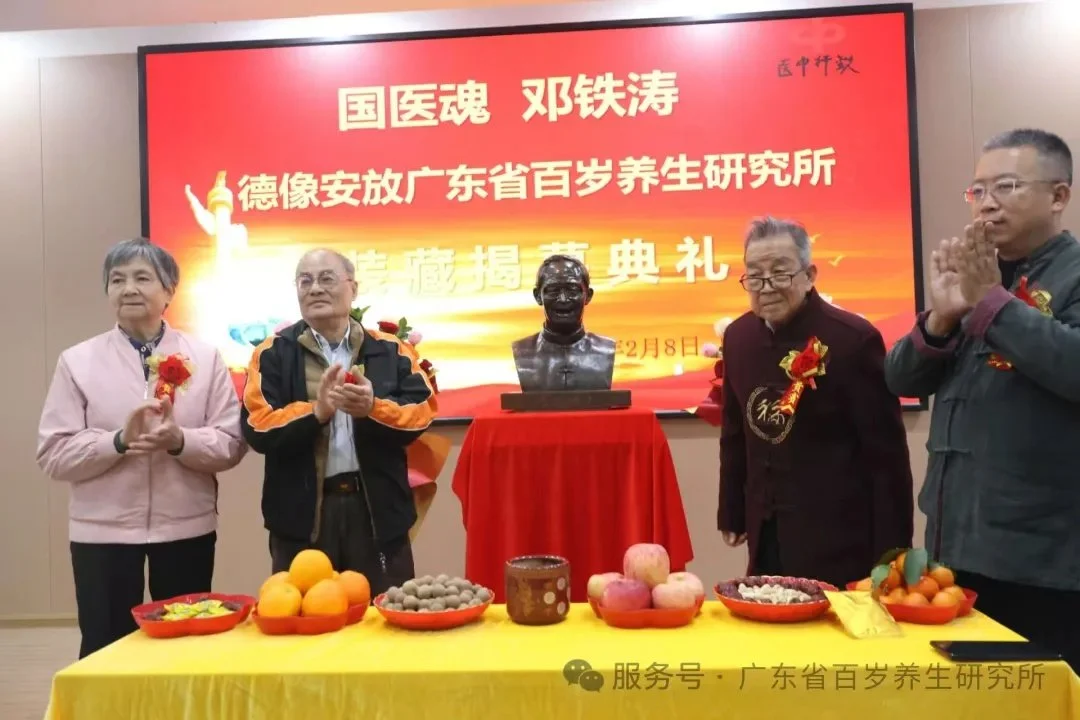
Professor Deng Tietao (1916-2019), a National Medical Master, was a founder, witness, and promoter of the TCM cause in New China. His century-long life trajectory is closely intertwined with the vicissitudes of modern TCM. What Deng left to posterity was not only outstanding clinical achievements and academic contributions but also an invaluable spiritual wealth, epitomized by his unique "Three Ideals" system: his academic thought, represented by theories such as the "Five Zang Organs Interrelation Theory," forms its foundation; his ideal of being a "staunch TCM practitioner," marked by actions like submitting five petitions to the central government and volunteering to fight SARS, represents its character; and his professional dream, outlined in the blueprint of building an inclusive and humane "TCM Kangleyuan," embodies its sentiment. These "Three Ideals" complement each other, collectively painting a complete spiritual portrait of a "great physician." In the current context of the state's strong advocacy for curriculum-based ideological and political education and the comprehensive promotion of the "New Medical Science" initiative, delving into and elucidating the profound connotations and educational value of Deng Tietao's "Three Ideals" holds significant practical importance for cultivating TCM talents of the new era with both ability and integrity, and with benevolent hearts and skillful hands.
II. Analysis of the "Three Ideals" Connotation System
(1) The Foundation of Thought: An Academic System Rooted in Tradition and Innovating While Upholding Orthodoxy
Professor Deng Tietao's academic thought is the solid cornerstone of his "Three Ideals" system. Its core feature is its guidance by materialist dialectics, achieving a modern transformation and innovation of theory within a deep traditional context.
Theoretical Innovation: Proposing the "Five Zang Organs Interrelation Theory." Feeling that the traditional Five Elements theory contained elements of simple dialectical thought but also had certain mechanical aspects, Deng creatively proposed the "Five Zang Organs Interrelation Theory." This theory emphasizes the dynamic, organic, and multi-dimensional interrelationships among the five physiological systems of the heart, liver, spleen, lung, and kidney, transcending the simple cycle of generation and control. This theory is more consistent with clinical practice, provides a more precise theoretical framework for explaining complex disease mechanisms and guiding syndrome differentiation and treatment, and was included in the national "973 Program" basic research project, serving as a model for the modernized innovation of TCM theory.
Methodological Core: Adhering to "Practice is the Sole Criterion for Testing Truth." Deng consciously applied materialist dialectics to TCM research. When addressing the long-standing "Cold Damage vs. Warm Disease" debate in TCM history, he did not simply negate or reconcile the two. Instead, he delved into clinical practice, recognizing that both theories were summaries of different external pathogenic disease experiences and each held its own truth. He advocated for unifying them into a more comprehensive system of external febrile diseases. During the 2003 fight against SARS, he strongly advocated for TCM intervention, guided by warm disease theory, and achieved remarkable results of "zero transfers, zero deaths, and zero infections," which stands as powerful proof that his academic thought can withstand the test of practice.
Inheritance and Dedication: A Great Master's Style of Nurturing Talent. Deng selflessly contributed his family's secret formula, "Wuling Zhitong San" (Five-Spirit Pain-Relieving Powder), for development into a new drug to benefit the public, donating the proceeds. In talent cultivation, he put forward the resounding slogan, "He who learns from me must surpass me," vigorously promoting the "master-apprentice" system and advocating for "collective mentorship for a collective." This laid the talent foundation for the sustainable development of the TCM cause.
(2) The Soul of the Ideal: The "Staunch TCM Practitioner" Spirit of Shouldering Responsibility and Having Benevolent Heart and Skillful Hands
Being a "Staunch TCM Practitioner" is the most distinct label of Professor Deng Tietao's life. The core of this ideal is the integration of loyalty to the TCM cause with love for the Party and the people, demonstrating a sense of national responsibility and the courage to take on challenges.
Spirit of Responsibility: Stepping Forward at Critical Moments. At several critical junctures in the development of the TCM cause, Deng unhesitatingly stepped forward. Most notably, he led or participated in five petitions to the central government, speaking candidly about the pros and cons and emphasizing the importance of TCM. This made historic contributions to key decisions, such as maintaining the independent administrative structure of the State Administration of Traditional Chinese Medicine, embodying the lofty mission of "carrying forward the lost learning of past sages."
Spirit of Benevolence: Responding to Crises and Daily Persistence. In 2003, when the SARS epidemic raged, the 87-year-old Deng proactively volunteered to serve as the head of the National Administration of TCM's Anti-SARS Expert Advisory Group, demonstrating the essential character of a physician who "reveres life and heals the wounded and rescues the dying." In his daily life, he often paid for medicine for impoverished patients. In his will, the most precious legacy he left to his descendants was "a benevolent heart and skillful hands, serving the people wholeheartedly," which fully interprets the original aspiration of a Communist and the benevolence of a physician.
Loyal Character: The "Red Gene" and Firm Belief. Deng worked for the revolutionary cause in his early years. After joining the Party in 1958, he was infinitely loyal to the Party's cause. His "staunchness" stemmed from his faith in Marxism, his confidence in TCM culture, and his deep affection for the people—an indestructible ideal and belief integrated with the "red gene."
(3) The Goal of the Dream: Building an Inclusive, Humane "TCM Kangleyuan" that Unites Heaven and Humanity
Deng's dream transcends personal achievement and disciplinary boundaries, pointing to a grander and more noble vision for human health—the construction of a "TCM Kangleyuan." The core of this dream is to be people-oriented, pursuing the return of medical humanitarianism and the holistic development of individuals.
Paradigm Revolution: From "Disease-Centered" to "Health-Centered." He envisioned a future of medicine centered on wellness and preventive care, as encapsulated in the saying, "Superior physicians treat before illness arises." In this vision, the "Kangleyuan" would replace the hospital as the primary institution, with hospitals taking on a supplementary role. This heralds a fundamental shift in the medical paradigm, emphasizing prevention, regulation, and the improvement of quality of life.
Value Orientation: Advocating "Simple, Effective, Convenient, and Inexpensive" and Inclusivity/Fairness. He paid special attention to the right to health of people in the Third World, emphasizing that medicine must be "simple, effective, convenient, and inexpensive"—a fine tradition of TCM. This proposition reflects a deep-rooted people-centered stance and a global vision, aligning highly with the concept of building a global community of health for all.
Elevation of Realm: The Integration of Medicine with Humanities and Arts. Deng dreamed of a medicine that could integrate with culture, aesthetics, and art. Through diverse means such as Qigong, medicinal cuisine, music, and environment, the maintenance of health could become a pleasant mind-body experience, thereby elevating to the harmony and beauty of the spiritual world. This achieves a transition from treating "illness" to healing "the person."
III. The Organic Unity of the "Three Ideals" and Their Value in Ideological and Political Education
Deng Tietao's "Three Ideals" do not exist in isolation but form a logically rigorous, mutually supportive organic whole.
Thought is the foundation: Without solid, innovative academic thought as support, the "Staunch TCM Practitioner" ideal loses its source of strength, and the Kangleyuan dream becomes a castle in the air.
Ideal is the driving force: Without unwavering loyalty to the cause and a spirit of dedication, academic research cannot be deepened and sustained, and great dreams are difficult to persevere with and advance amidst hardships.
Dream is the guide: Without ultimate concern for human health and well-being, academic exploration can easily lose its way, and personal ideals may become narrow. The Kangleyuan dream endows academic thought and professional ideals with a noble meaning and a bright direction.
Its value in ideological and political education is mainly reflected in:
Strengthening cultural confidence and patriotism: Deng's theoretical innovation stems from cultural confidence, and his "staunch" spirit is rooted in patriotism. It serves as a vivid teaching material to guide students in enhancing their national pride and aspiring to serve the country and the people.
Cultivating a scientific spirit and professional ethics: His scholarly attitude of "practice testing truth" and his medical ethics of "benevolent heart and skillful hands" are models for fostering a pragmatic, dedicated, and selfless spirit among students.
Establishing lofty ideals and a people-centered stance: The Kangleyuan dream guides students to integrate their personal development into the tide of the times, to establish lofty aspirations to serve the people and contribute to humanity, and to consciously resist negative trends like money-worship and utilitarianism.
IV. Conclusion
The "Three Ideals" of National Medical Master Professor Deng Tietao are a rich mine of thought and a spiritual lighthouse. The profundity of his academic thought, the firmness of his professional ideal, and the nobility of his career dream together forged the "Deng Tietao Spirit" that shines for future generations. Systematically sorting out and elucidating this system is not only the best way to commemorate him but also an inherent requirement for the development of TCM education in the new era. Integrating the "Three Ideals" into the entire process of TCM talent cultivation can achieve the organic unity of knowledge transmission, ability cultivation, and value guidance. This will provide inexhaustible momentum for cultivating more "Staunch TCM Practitioner" successors with passion, responsibility, and competence, promoting the revitalization of TCM, and contributing to the Healthy China initiative.