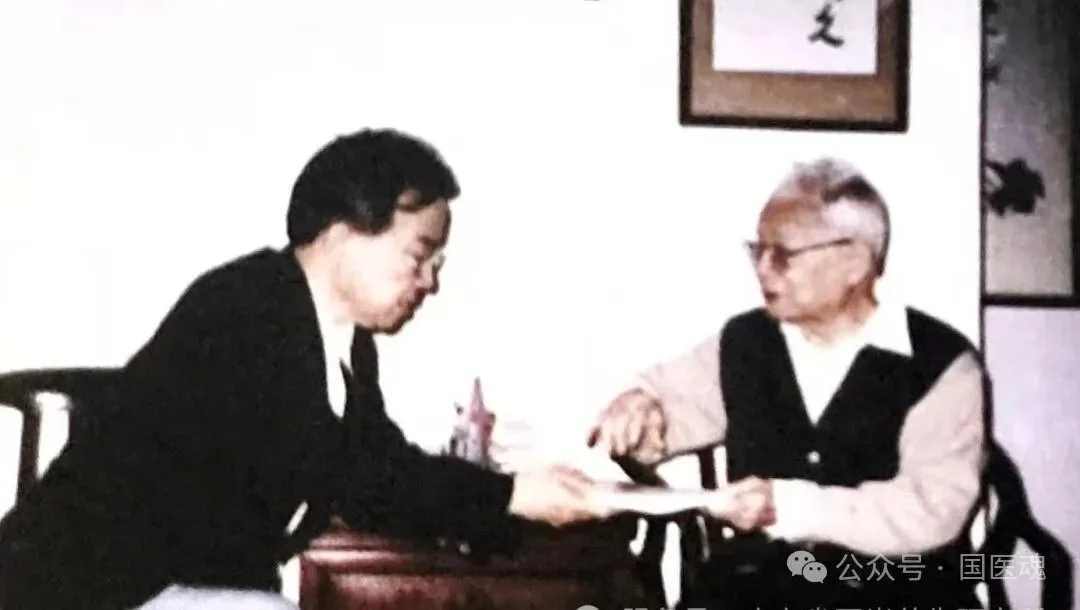
Lineage Transmission | Deng Tietao’s “Frugal” Student Xiao Xinhe: Riding a Secondhand Bicycle for Over 20 Years, Donating Over 1.27 Million Yuan in Scholarship Funds

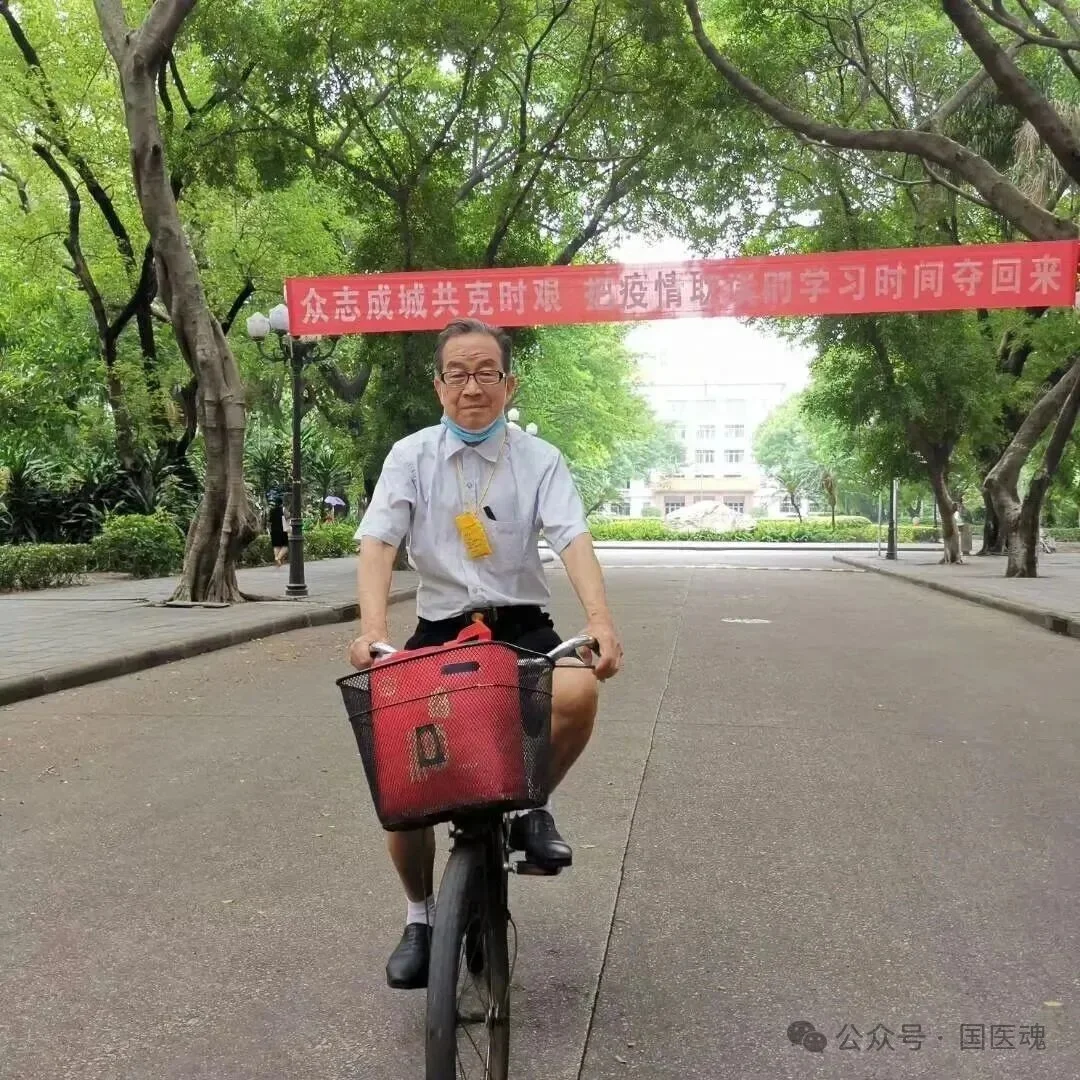
On the tree-lined paths of the Sanyuanli Campus of Guangzhou University of Chinese Medicine, one can often spot an energetic, plainly dressed elderly man pedaling vigorously on a slightly rusted bicycle across the campus. This professor, known as the “stingy professor,” spends no more than 7 yuan on a meal and has ridden the same secondhand bicycle for over 20 years.
He is Professor Xiao Xinhe, born in 1937, now in his eighties. Xiao is a student of Deng Tietao’s 1959 graduating class and one of the most steadfast promoters of his mentor’s “Centenarian Project.” Despite his frugality toward himself, Xiao has donated a cumulative total of over 1.27 million yuan to scholarship funds and has passed on all his clinical skills and health preservation methods to his students and patients without reservation.
From Deng Tietao to Xiao Xinhe, two generations of traditional Chinese medicine practitioners interpret the soul of medical benevolence in different ways, inheriting the lineage values of diligence, thrift, selflessness, and dedication.
The “Centenarian Project”: A Shared Ambition Between Teacher and Student
In Chinese culture, centenarians are revered as “human auspiciousness”—symbols of longevity, health, and happiness. In his later years, Deng Tietao, with the benevolence and foresight of a physician, solemnly launched the “Centenarian Project.” This initiative embodies two core principles of Deng’s philosophy: first, “benevolent heart and skill”—the enduring warmth and ethical foundation of TCM across millennia; second, “treating disease before it arises”—using appropriate regulation and methods to consolidate righteous qi, prevent illness before it occurs, and achieve high-quality longevity.
These two principles, a spiritual reflection of Deng Tietao’s lifelong medical practice and teaching, profoundly influenced his student Xiao Xinhe. During his university years, Xiao studied under renowned physicians like Deng Tietao. Their demeanor and spirit of dedication helped him find his own life credo: “The meaning of life lies in dedication, learning, struggle, then health, and finally happiness.” This sentence later became the spiritual cornerstone of his practice of the “Centenarian Project.”
Deng Tietao guided his disciples in systematically organizing the theories and rich techniques of “preventive treatment” from the treasure trove of Chinese medicine, actively applying them in daily life, testing and refining them continuously. Among his many disciples, Xiao Xinhe became one of the most steadfast promoters of the “Centenarian Project.” He compiled four sets of textbooks for the project, along with books such as Essays on Centenarian Health Preservation, systematically expounding and disseminating TCM wellness concepts, emphasizing “lifelong learning, lifelong struggle, lifelong health, lifelong dedication, and lifelong happiness.”
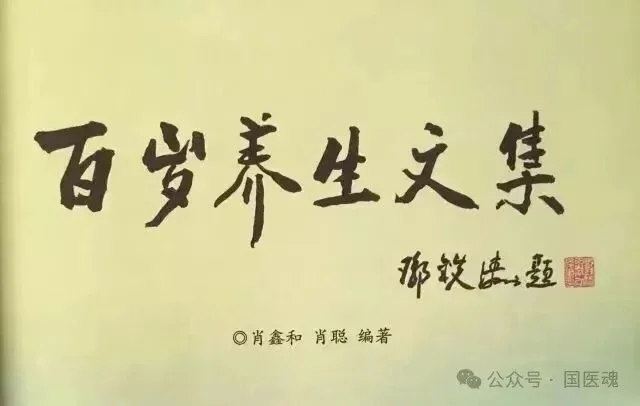
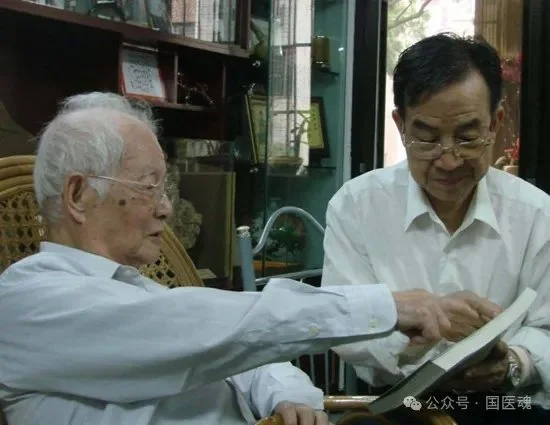
Upon learning that his disciple had authored a monograph, Deng Tietao personally wrote the preface for The Centenarian Project. Its opening line, “Professor Xiao Xinhe is my student,” overflowed with pride and gratification. He also remarked, “The proposition of ‘The Centenarian Project’ is excellent. I hope everyone can be healthy, live beyond a hundred years, and contribute to the development of TCM health preservation.”
Thus, teacher and student walked together along the path of the “Centenarian Project,” passing the torch hand in hand.
True health lies in front-end prevention, daily care, and empowering every individual to become the master of their own health. Xiao Xinhe often says that his mentor Deng Tietao remained sharp-eyed, clear-eared, and spirited even at the age of one hundred—closely tied to his consistent practice of self-care and daily health maintenance. Following his teacher’s example, Xiao Xinhe has also developed numerous original health methods based on predecessors’ experiences, freely teaching them to his patients. Examples include the “Xiao Xinhe New Fruit Peel Foot Soak Method” and the “Xiao Xinhe Spinal Rolling Marrow Strengthening Exercise.” These methods represent both Xiao’s inheritance of TCM and his mentor’s wellness philosophies and his continuous enrichment and development through practice.
“Frugality” and “Generosity”: A Shared Character Trait Passed Down Through the Lineage
Deng Tietao lived a life of simplicity and frugality. When the university offered him an apartment with an elevator, he simply said, “I am used to living in my old house of decades; I won’t move.” This refusal reflected the indifference of a renowned physician toward material comforts and his commitment to the spiritual world.
In this regard, his student Xiao Xinhe deeply inherited the true teaching. He has served as a professor at Guangzhou University of Chinese Medicine, a director of the China Famous Doctors Association, a committee member of the Guangdong Sociology Society’s Health Research Professional Committee, and director of the Guangzhou Centenarian Project Research Institute. Yet among these titles, Xiao is better known by another name: the “stingy professor.”
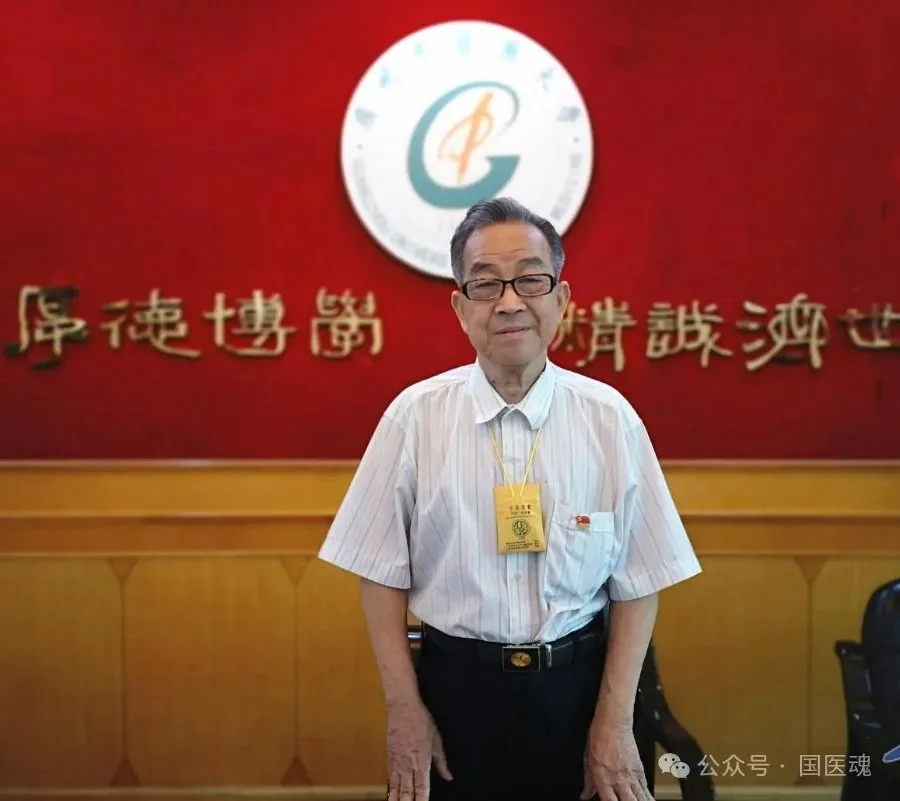
In 2020, media outlets such as People’s Daily, Guangming Daily Online, and China National Radioreported on Xiao Xinhe’s story as the “stingy professor.” He habitually eats in the school cafeteria, spending no more than 7 yuan per meal. His shirts and shorts are rarely replaced unless absolutely necessary. The bicycle he rides daily was a “no-name” secondhand purchase for 45 yuan, which he has ridden for 25 years. When it breaks, he repairs it and continues using it; over the years, he has spent just over 100 yuan on repairs.
What outsiders see as extreme frugality stems from a deeply etched memory. In the 1950s, due to financial hardship, his family could only provide him with 1 yuan per month for living expenses while he was still a student. Thanks to the care of the Party and the state, tuition, accommodation, meals, and medical expenses were fully covered, with an additional 15 yuan monthly food subsidy, enabling him to complete his studies. From that moment on, he secretly resolved to do his utmost to help impoverished students. Having emerged from those difficult years, diligence, frugality, and gratitude toward society have been deeply ingrained in his bones. After his financial situation improved, he has quietly given back to society in his own way.
It is precisely this “frugality” that has shaped his other side—his “generosity.”
Though harsh and frugal with himself, Xiao Xinhe is exceedingly generous toward his students. He regularly allocates his lecture fees, clinical earnings, bank interest, and 6% of his retirement salary to establish scholarship funds, donating them to the “Concerned for the Next Generation Scholarship Fund” at Guangzhou University of Chinese Medicine. As of April 2026, he has made 34 donations, totaling over 1.27 million yuan. Moreover, he has mobilized social enterprises and individuals to donate to the university’s scholarship fund, with donations he inspired exceeding 800,000 yuan.
When faced with others’ confusion, he often says, “Everything I have belongs to the Party, the nation, the government, my alma mater, and my teachers. I must repay them with all my heart, responsibility, and strength!”
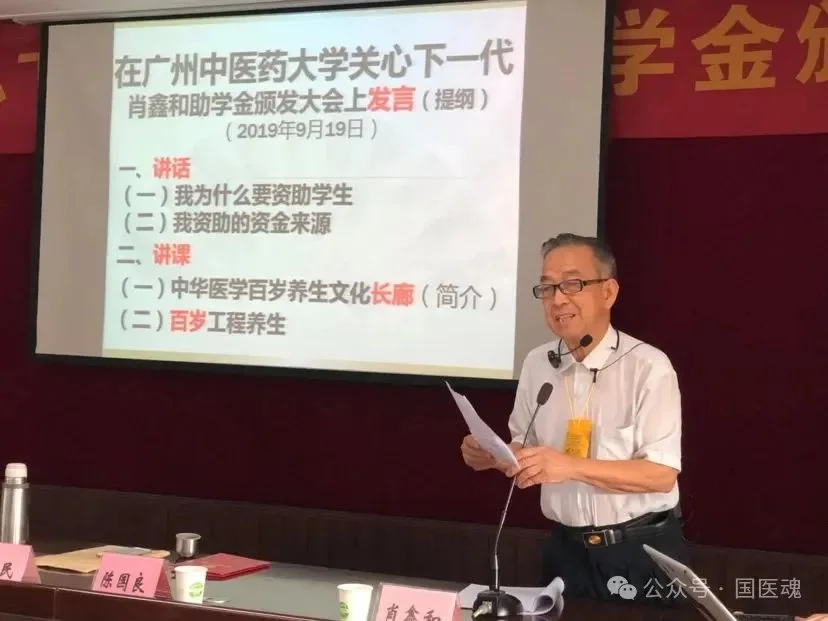
An elder who counts every penny for himself spends “a thousand gold pieces” for the next generation. This seemingly contradictory behavior actually reveals a clear thread of spiritual inheritance—from Deng Tietao to Xiao Xinhe, frugality is the external label, but gratitude and dedication are the inner soul.
Caring for the Next Generation: The Torch Passed Down Through the Lineage
During the critical phase of the national “Seventh Five-Year Plan” science and technology research projects, Deng Tietao, empathizing with his students’ financial struggles, used his own funds to provide subsidies to those participating in research. Later, he donated his savings to establish a fund supporting TCM research. In his later years, he donated the full amount of his first Qihuang Award prize to the cause of Chinese medicine. He repeatedly urged his successors: “Carry forward the inheritance and development of TCM well, or you will be sinners in history.” This dedication to education and heritage represents Deng Tietao’s deepest love for the next generation.
This responsibility as a Party member and this benevolent sentiment of “caring for the next generation” have likewise been passed down to Xiao Xinhe.
Deng Tietao often told his students, “Those who learn from me must surpass me.” Xiao Xinhe has always kept these words in his heart. Upholding his mentor’s philosophy of “surpassing me,” he publicly pledged to earnestly implement the strategic decisions of his teacher Professor Deng Tietao regarding “the soul of medicine: benevolent heart and skill,” as well as the medical strategies of “superior physicians treat disease before it arises” and being a “staunch TCM practitioner.” He decided to hold a benevolent heart toward his students, imparting all his lifelong learning without reservation to future generations, passing on all his acquired diagnostic skills and health preservation methods to his students.
Even after retirement, Xiao Xinhe continued to see patients, remaining active on the front lines of medical care. He said, “I have witnessed with my own eyes over half a lifetime the development of the university and the flourishing of TCM. I will continue to strive until the very end of my life.”
From Deng Tietao to Xiao Xinhe, from the “Centenarian Project” to scholarship funds, from indifference to material possessions to generosity toward students—the life trajectories of this teacher and student quietly converge at many significant spiritual junctures. They each interpret, in their own ways, the true meaning of “benevolent heart and skill.” This is the character of a lineage, a power passed down like a torch.