Consultation Response for a Patient in China — Analysis of Headache Caused by Patent Foramen Ovale (PFO) and an Integrative Treatment Approach
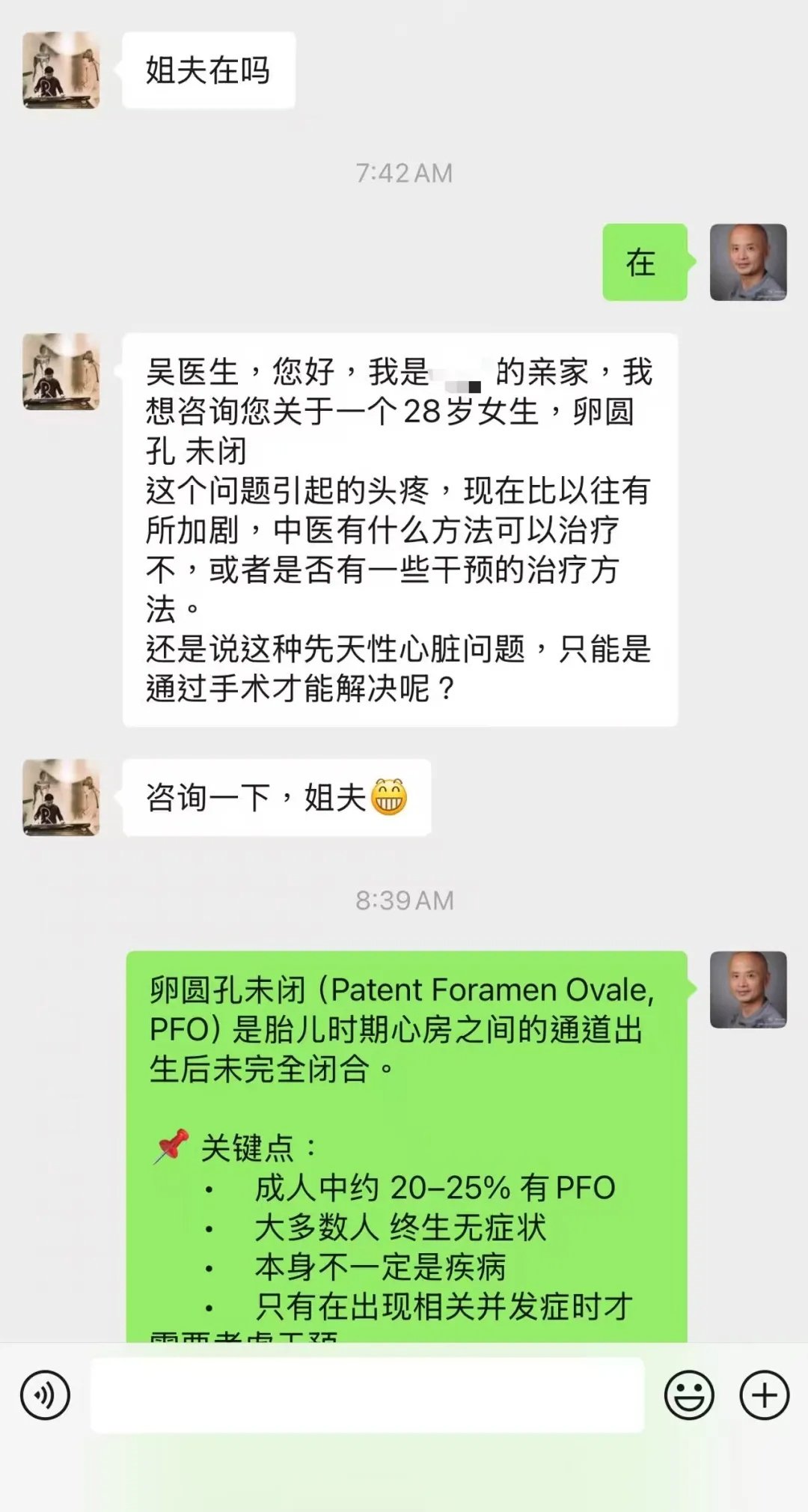
Question:
Dr. Wu, I am your nephew’s in-law. My 28-year-old daughter has a patent foramen ovale (PFO). Her headaches, which seem related to this condition, have recently worsened compared to before. Are there TCM treatment options? Are there any interventional therapies? Or, since this is a congenital heart condition, can it only be resolved through surgery?
⸻
Dr. Wu’s Response
I. What Is Patent Foramen Ovale (PFO)?
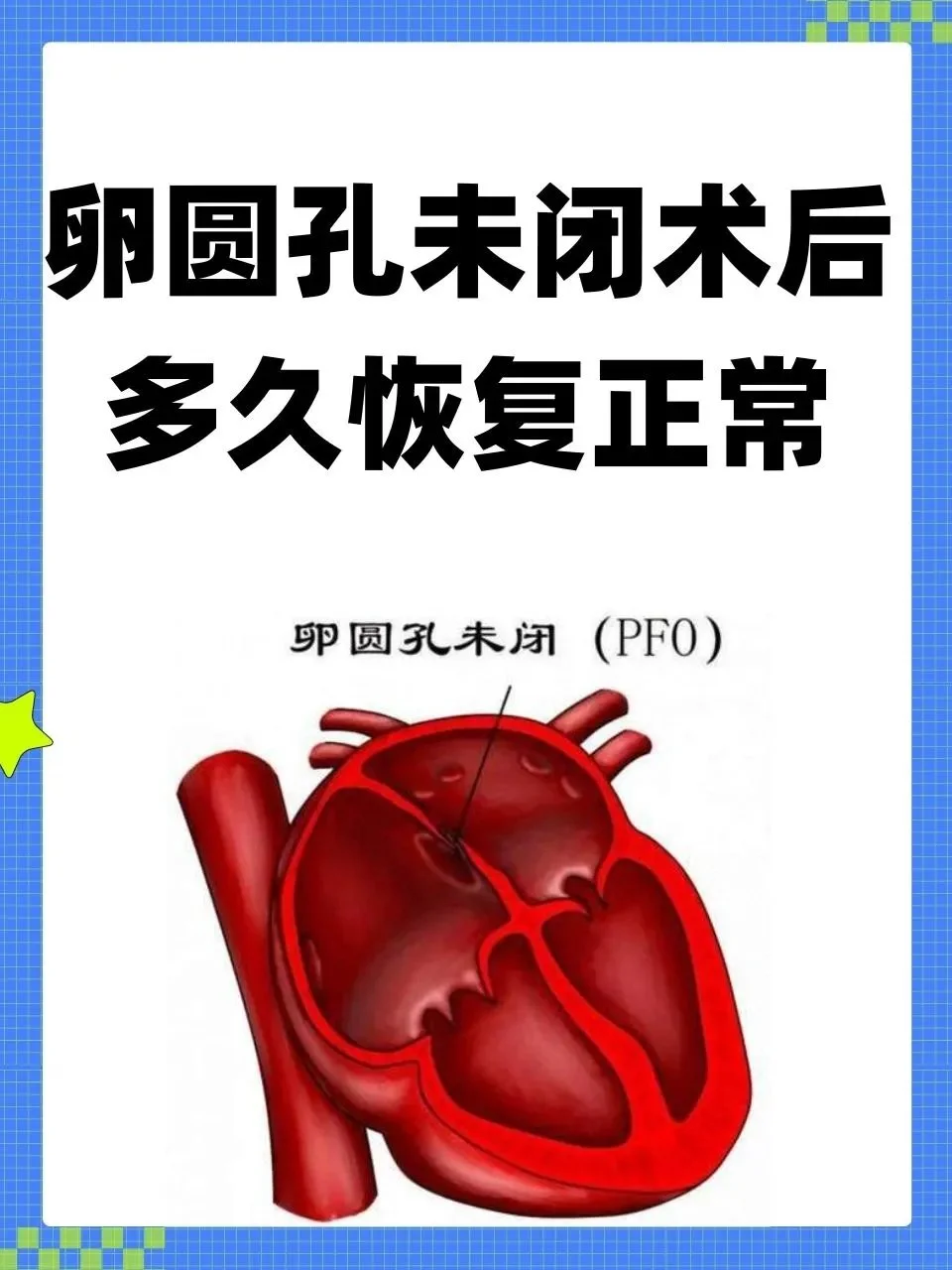
Patent Foramen Ovale (PFO) is a fetal opening between the atria of the heart that fails to completely close after birth.
📌 Key Points:
• About 20–25% of adults have a PFO
• Most people remain asymptomatic for life
• It is not necessarily a disease in itself
• Intervention is considered only when complications occur
⸻
II. The Relationship Between PFO and Headache
Research has found:
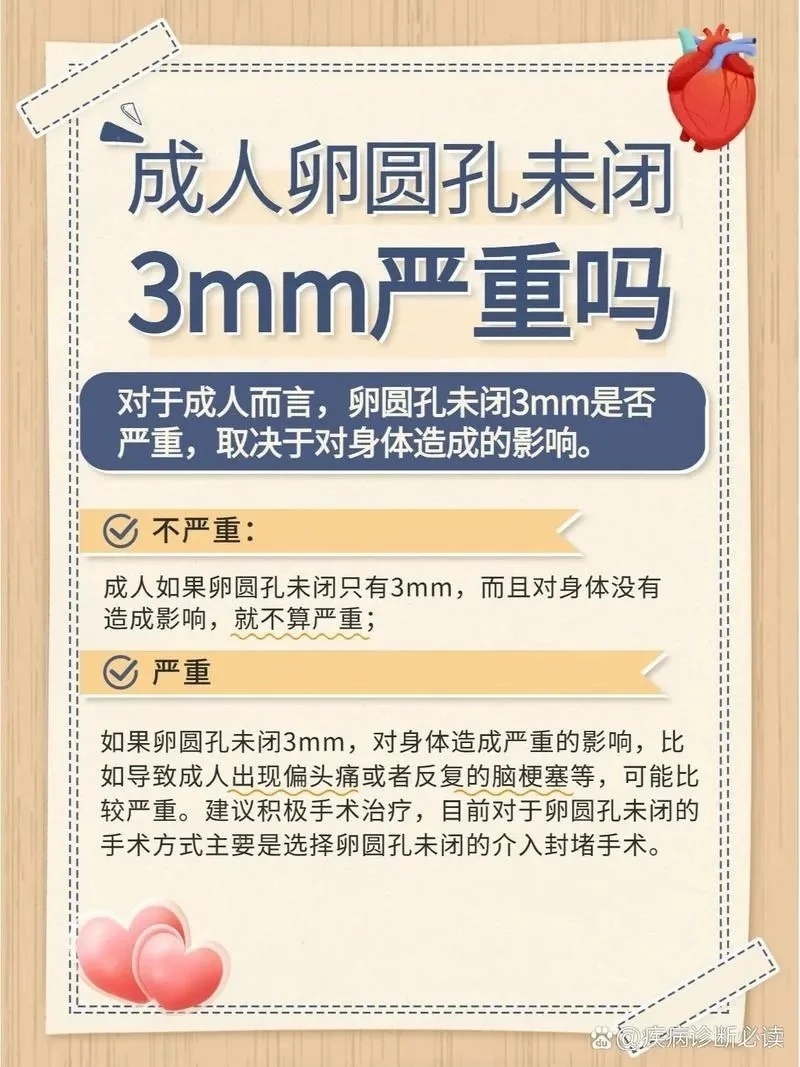
• A statistical association between PFO and migraine (especially migraine with aura)
• However, the causal relationship is not absolute
• Not all PFO patients develop headaches
• Not all migraine patients require PFO closure
Proposed Mechanism:
1. Right-to-left shunt allows microemboli or vasoactive substances to enter cerebral circulation
2. These trigger cerebral vascular reactions
3. Migraine may be induced
📌 Important: The medical community still debates this issue.
Current international guidelines do not recommend PFO closure solely for migraine.
⸻
III. Surgical Treatment (Transcatheter Closure)
This is a minimally invasive interventional procedure.
✅ Advantages
• Eliminates right-to-left shunt
• Clear benefit if there is a history of cryptogenic stroke
• Some migraine patients improve after surgery
❌ Risks and Limitations
• Procedural risks: arrhythmia, vascular complications
• Long-term antiplatelet therapy required
• Risk of thrombosis
• Headache does not always improve
• A small number may develop new migraines
📌 Medical Consensus:
✔ PFO + cryptogenic stroke → Closure recommended
❌ Headache alone → Generally not a surgical indication
⸻
IV. Non-Surgical Treatment
1️⃣ Western Conservative Management
• Antiplatelet therapy (e.g., aspirin)
• Migraine preventive medications
• Avoidance of triggers
• Blood pressure, stress, and sleep regulation
Suitable for:
✔ No history of stroke
✔ Headache as the main symptom
⸻
V. How Does Traditional Chinese Medicine (TCM) View This?
TCM does not focus on the anatomical “unclosed opening,” but on overall Qi and Blood circulation.
With worsening headaches, possible patterns may include:
• Qi deficiency failing to secure
• Blood stasis disturbing upward
• Phlegm turbidity obstructing the channels
• Liver Yang rising
From a TCM perspective, PFO may reflect:
• Congenital constitutional weakness
• Heart Qi deficiency
• Qi failing to secure Blood
However, headaches themselves are more often related to:
• Blood stasis
• Wind pathogens
• Liver fire
• Phlegm-dampness
⸻
VI. TCM Treatment Directions
① Invigorate Blood and unblock channels
(e.g., Salvia miltiorrhiza/Dan Shen and Chuan Xiong-type approach)
② Transform phlegm and resolve stasis
(for phlegm-stasis patterns)
③ Tonify Qi and strengthen the root
(if Qi deficiency constitution)
④ Soothe the Liver and subdue Yang
(if accompanied by stress, irritability, menstrual irregularity)
⸻
VII. Surgery vs. Non-Surgical Treatment — Comparison
Surgical Closure
Interventional closure eliminates the shunt structurally and may be considered an “anatomical cure.” It has clear preventive value if there is unexplained stroke or definite embolic risk. However, in patients with headache alone, improvement is uncertain and varies individually. As a cardiac intervention, it carries procedural risks (arrhythmia, thrombosis, vascular complications). Long-term antiplatelet therapy and follow-up are usually required. Indications must be strictly evaluated.
Non-Surgical (Conservative + TCM Regulation)
This does not structurally close the PFO and therefore does not “cure” the shunt. However, in patients without stroke history, it has higher safety. Through antiplatelet therapy, neurological migraine management, and TCM approaches to regulate Qi and Blood, resolve stasis, and harmonize the Liver, headache frequency and constitution can improve. Risks are relatively low and suitable as first-line management for patients with isolated headache or small shunt volume. This is a gradual, constitution-focused strategy emphasizing balance and symptom control.
⸻
VIII. Key Assessment Points
Please clarify whether she has:
• ❓ History of unexplained stroke?
• ❓ Transient ischemic attack (TIA)?
• ❓ Migraine with aura (flashing lights, visual disturbance)?
• ❓ Headaches related to menstruation?
If she only has:
✔ Isolated headache
✔ No imaging evidence of infarction
✔ No history of thrombosis
👉 Surgery is not urgently recommended.
Recommended steps:
1. Neurology evaluation for migraine subtype
2. Cardiology assessment of shunt severity
3. Trial of 3–6 months of systematic conservative + TCM treatment
⸻
IX. Current International Perspective
In current U.S. and European guidelines:
👉 Migraine alone is not a strong indication for PFO closure
👉 History of stroke is the primary surgical basis
⸻
X. My Suggested Conservative Path
Step 1: Clarify embolic risk
Step 2: Assess shunt volume
Step 3: Begin conservative therapy + TCM regulation
Step 4: Consider surgery only if recurrent neurological events occur
⸻
If you are willing, please provide:
• Tongue presentation
• Pulse condition
• Menstrual status
• Headache location (forehead? unilateral? occipital?)
• Sensitivity to cold or heat
I can then provide a more specific TCM pattern-based approach.
🌿 Many individuals with PFO never require surgery in their lifetime.
The key question is whether dangerous events have occurred.
Headache can often be regulated.
Do not rush toward surgery simply because the condition is congenital.