7-Day Beginner’s Practice for Health Preservation in Fengyang Taoist Traditional Chinese Medicine
🗓️ Day 1: Basic Orientation + Self-Check
Learning: Understand the core concepts of Traditional Chinese Medicine (TCM): Yin-Yang, the Five Elements, Qi and blood, and the internal organs (Zang-Fu). Grasp the central ideas of the “holistic view” and “treatment based on syndrome differentiation.”
Practice:
Record your personal state (sleep quality, appetite, energy level, sensitivity to cold/heat, bowel movements).
Learn the basics of tongue diagnosis and observe your own tongue body and coating (color, thickness, moisture).
Tools: Prepare a notebook and create a “Daily Body Record” template.
🗓️ Day 2: Introduction to Dietary Regulation
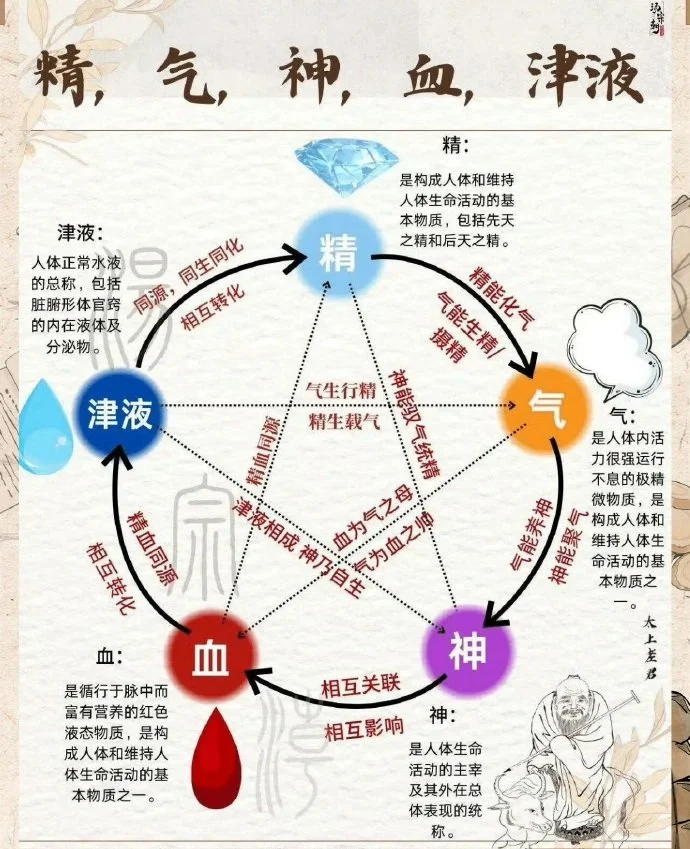
Learning: Master the principle that “food and medicine share the same origin” (药食同源) and learn to distinguish between cold, hot, and neutral common foods.
Practice:
Adjust your three daily meals. Avoid raw, cold, spicy, and greasy foods, as well as milk and dairy products. Focus on warm, soft, easily digestible foods.
Drink one cup of health-preserving herbal tea (e.g., ginger and red date tea for those with a colder constitution; chrysanthemum and goji berry tea for those with a hotter constitution).
Record how your body feels after eating (e.g., bloating, dry mouth, fatigue).
🗓️ Day 3: Meridian Basics + Simple Massage
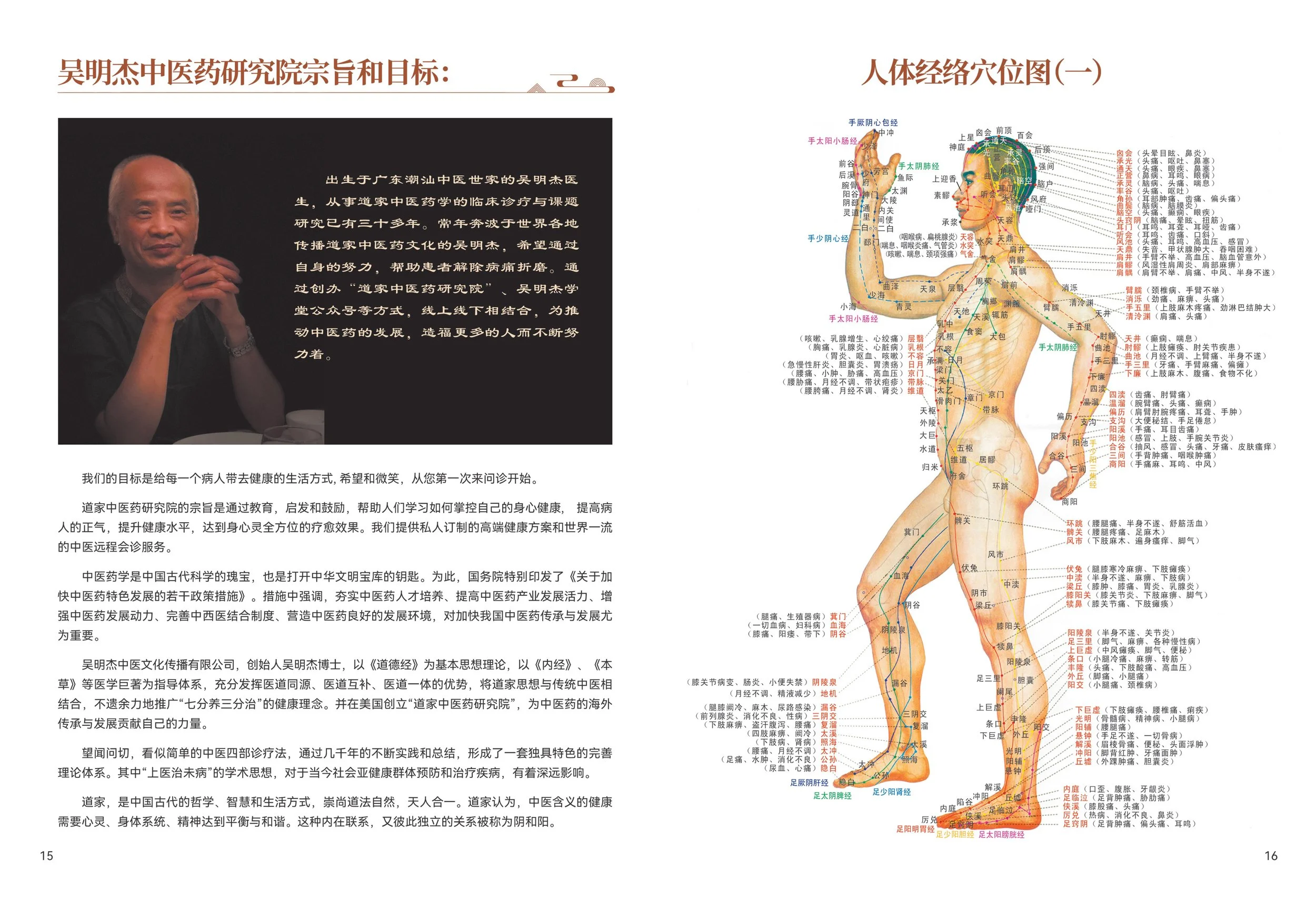
Learning: Get to know 10 commonly used meridians (e.g., Lung Meridian of Hand-Taiyin, Stomach Meridian of Foot-Yangming) and memorize 3 key acupoints (Zusanli ST36, Hegu LI4, Neiguan PC6).
Practice:
Massage Zusanli, Hegu, and Neiguan for 5 minutes each, morning and evening (using moderate pressure that produces a slight soreness).
Learn a simple tapping technique: lightly tap along the meridians on your arms and legs to help Qi and blood flow.
Tools: Prepare a meridian chart and mark the locations of the commonly used acupoints.
🗓️ Day 4: Daily Routine & Emotional Regulation
Learning: Understand the TCM principles of “regular daily life and emotional balance” (起居有常、情志调摄), and learn how staying up late and emotional fluctuations affect the internal organs.
Practice:
Keep a regular sleep schedule (go to bed before 23:00 and get up before 7:00); do not stay up late.
Practice 5 minutes of breathing meditation (abdominal breathing) to relax the body and mind and relieve anxiety.
Record your mood changes for the day and identify your emotional triggers.
🗓️ Day 5: Simple Exercise for Health
Learning: Understand the TCM concept that “movement generates Yang” (动则生阳) and learn the basics of health-preserving exercises such as Baduanjin and Tai Chi.
Practice:
Learn the first 3 movements of Baduanjin and practice them for 10 minutes each time, morning and evening.
Increase your daily walking to a total of about 6,000 steps and avoid prolonged sitting.
After exercising, record how your body feels (sweating, fatigue level, joint comfort).
🗓️ Day 6: Small Syndrome Differentiation Practice + Question Review
Learning: Learn the criteria for identifying common constitutional types: Qi deficiency, Yang deficiency, Yin deficiency, and phlegm-dampness.
Practice:
Based on your records from the previous 5 days, make a preliminary self-assessment of your constitution.
Adjust one daily habit according to your constitution (e.g., for Qi deficiency, eat more Chinese yam and drink Astragalus tea).
Summarize any introductory questions you have (e.g., difficulty locating acupoints, confusion about constitution judgment).
🗓️ Day 7: Review and Long-Term Planning
Practice:
Organize your 7-day records of physical condition, diet, exercise, and emotions, and summarize the changes.
Create a long-term health plan (e.g., practice Baduanjin 3 times per week, maintain a regular sleep schedule, and eat regular meals).
Decide on your future learning direction (e.g., further study of meridians, learning moxibustion, or understanding common-condition regulation).